

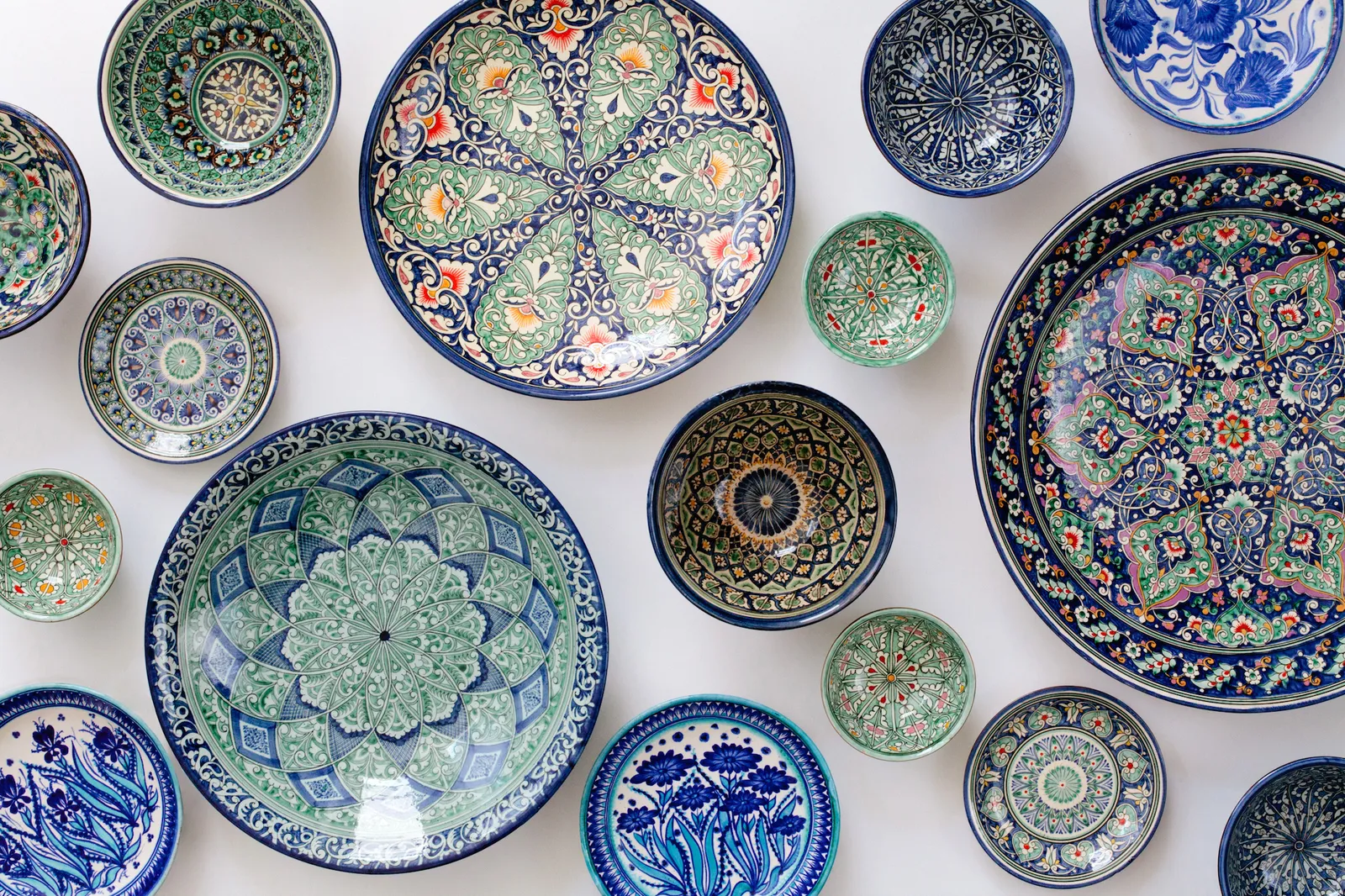
In the bustling bazaars and modern boutiques of Central Asia, a vibrant renaissance is taking shape. Tourists and connoisseurs alike are drawn to the luminous glazes and intricate patterns of handmade ceramics, carrying them home as treasured emblems of a rich, enduring culture. These pieces are more than souvenirs; they are echoes of a time when every vessel told a story, and every home was a gallery of local artistry. This resurgence is not just a trend but the latest chapter in an ancient craft’s epic journey — a story of empires, trade, resilience, and the unyielding creative spirit of the Uzbek people.
A Legacy Forged in Fire and Silk
The art of pottery is one of the oldest and most vital crafts in Central Asia, with roots stretching back to antiquity. Long before the Silk Road became a global highway, master potters in cities like Rishtan, Gijduvan, and the Khorezm oasis were transforming local earth into objects of sublime beauty and utility. These weren’t just isolated workshops; they were celebrated centers of excellence whose fame traveled far beyond the region.
The craft reached a breathtaking zenith during the Timurid Empire in the 14th and 15th centuries. Following the Mongol invasions, Amir Timur’s dynasty ushered in a cultural golden age. Potters, using clays sourced from the hills around Samarkand, began a remarkable new chapter. Captivated by elegant Chinese porcelain arriving via trade routes, they embarked on a quest not just to imitate it, but to master its essence.
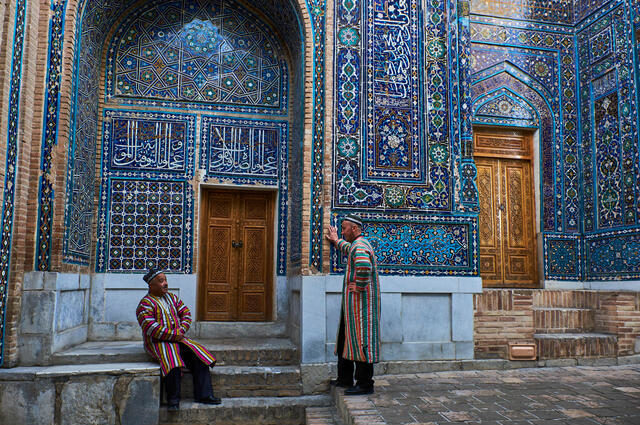
Lacking the secrets of porcelain’s raw materials, they innovated, developing new techniques to create their own porcelain-like ware. This gave birth to the iconic “Timurid ceramic style”: a cool, graphic aesthetic dominated by a celestial blue-and-white palette. These pieces were no mere copies. Local artisans began to weave their own motifs into the designs — fantastical phoenixes and dragons danced with roaming deer and flowers on shallow bowls and plates. This syncretic new style was so successful it became a prized export, finding its way to the markets of Europe. The same brilliant turquoise-blue glazes that adorned tableware also clad the majestic mosques, madrasahs, and palaces of Samarkand and Bukhara, becoming the architectural signature of an entire era.
The Symphony of Regional Styles
As the Timurid era waned, the great Uzbek Khanates of Bukhara, Khiva, and Kokand entered a period of relative isolation. This insularity fostered a remarkable diversification of the craft. While the Timurid influence remained, it was reinterpreted through a local lens, giving rise to distinct regional schools, each with its own artistic dialect.
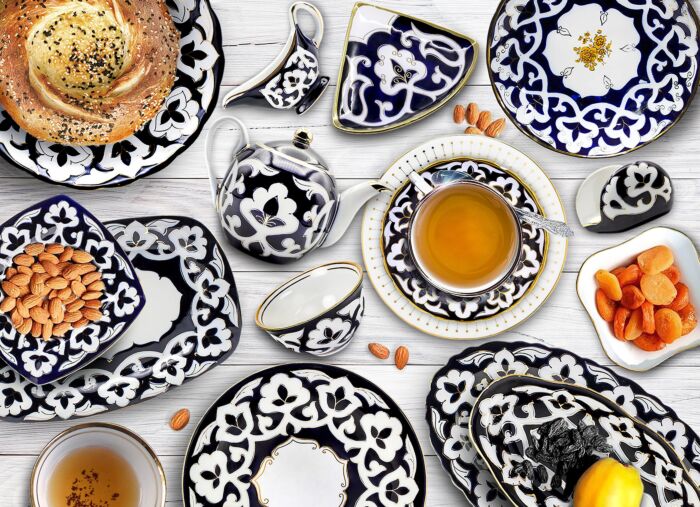
- The Ferghana and Khorezm schools in the east and southwest continued the tradition of cool, blue-white ceramics, thanks to their shared use of a special potash (ishkor) glaze that produced a signature blue hue. Yet, their styles were worlds apart. Khorezm became famous for its unique badiya — large, deep plates with vertical rims, decorated with bold, geometric patterns that flowed into dynamic plant motifs. Ferghana ceramics, particularly from the master center of Rishtan, were more delicate and lyrical, with intricate designs on a wider variety of forms, from milk jugs to water pitchers. By the late 19th century, Rishtan artisans were even incorporating everyday objects like knives and musical instruments into their ornamentation, a charmingly personal touch.
- The Bukhara-Samarkand school in the central region offered a stark, beautiful contrast. Its pottery glowed with a warm, earthy palette of yellow, brown, and green, with patterns applied through both brushwork and delicate engraving.
Across these regions, workshops hummed with specialized labor. The kosagar was a master of bowl-like forms — the kosa, piyola, and plates — while the kuzagar skillfully crafted jug-like vessels and large containers for water. From humble unglazed water jugs to thousands of tea bowls commissioned for a wealthy patron’s feast, these artisans met every need of their community.
From Soviet Shadows to a Modern Renaissance
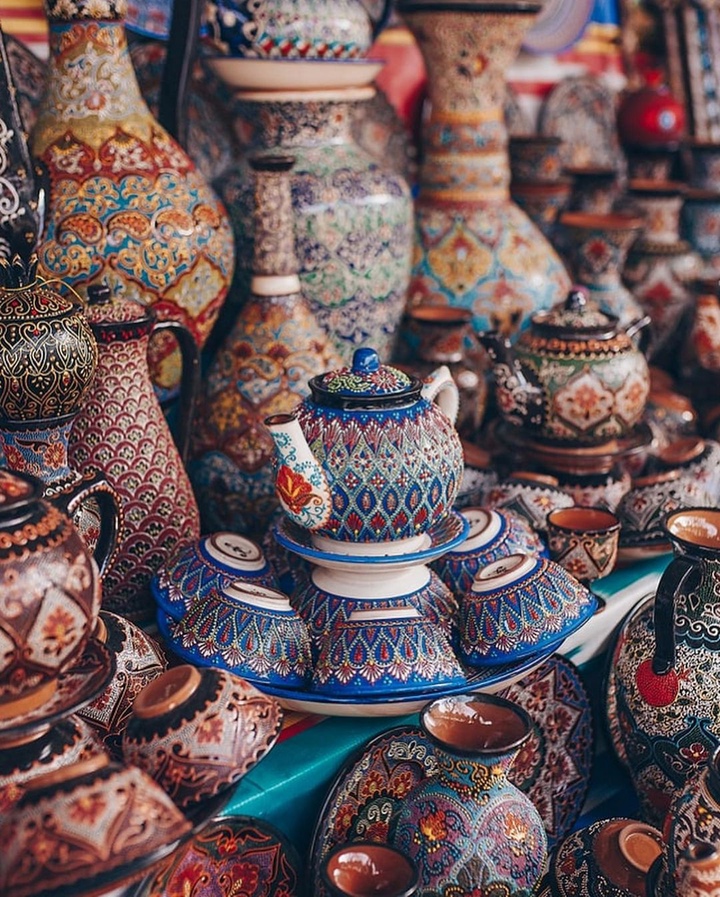
The 20th century brought profound challenges. During the Soviet period, the rise of mass-produced factory porcelain and shifting socio-economic landscapes led to a steep decline. By the 1980s, the flame of tradition had nearly flickered out in historic centers like Samarkand, Shakhrisabz, and Tashkent.
Yet, the craft endured. Following Uzbekistan’s independence in the 1990s, a concerted effort began to revive this vital part of the nation’s soul. Supported by government initiatives and international organizations, a new generation of artisans is not only preserving but revitalizing their ancestral traditions.
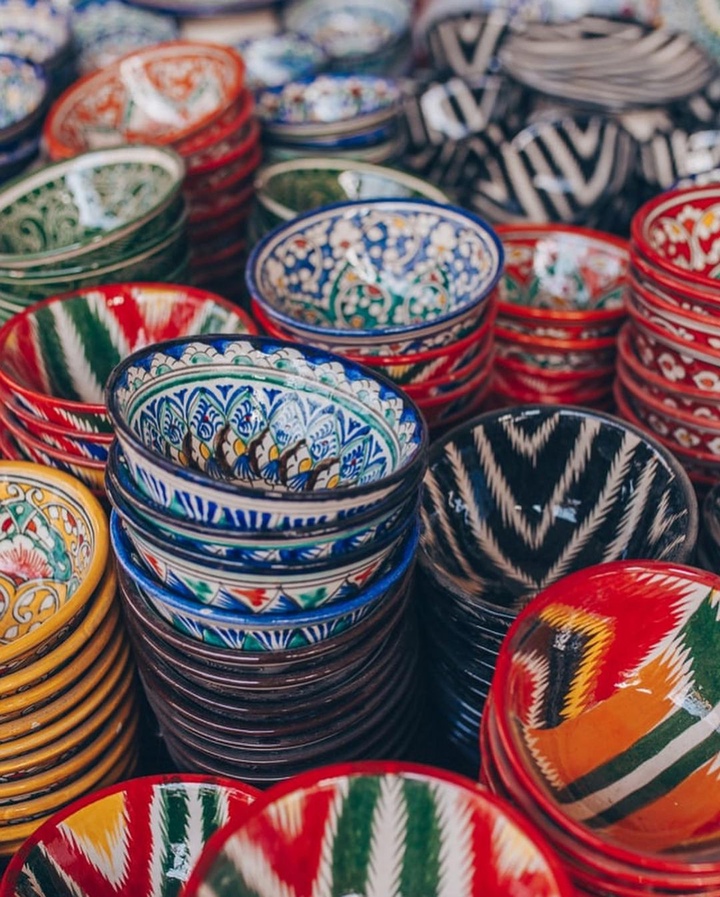
Today, Rishtan masters have restored the lost art of ishkor glaze, and some are incorporating elegant Arabic calligraphy into their classic designs. In Gijduvan, the distinct brush-painting style is flourishing once more. Khorezm potters continue their dual mastery of tableware and brilliant architectural ceramics. While the number of production centers has shrunk over the last century, the renewed focus on heritage offers powerful hope. The revival of the Gijduvan and Gurumsarai schools, backed by artisan grants and apprenticeship programs, is a testament to the resilience of this living heritage.
Inside the Potter’s World
Step into a traditional workshop and you enter a space where time seems to slow. The studio is often a room in the family home or an adjacent courtyard, with the kiln standing apart. At its heart is the potter’s wheel (charkh), a simple, ingenious device of two wooden disks on a vertical axle. The potter sits, spinning the large lower wheel with his feet, while his hands, guided by generations of inherited knowledge, coax a lump of spinning clay into a perfect, symmetrical form.
The process is a patient dance of earth, water, and skill. After being shaped, vessels are set out to dry before being painted with pigments and coated in glaze. The workshop is filled with the tools of the trade: iron cauldrons for mixing glazes, mortars and pestles for grinding pigments, and brushes of varying fineness for ornamentation.
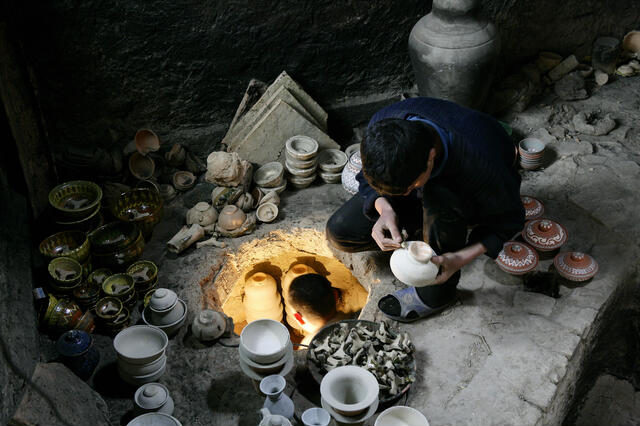
Even the largest pieces, like the meter-high khums for storing grain and water or the beehive-shaped tandyr ovens for baking bread, are crafted by hand, built coil by coil and smoothed with wooden paddles. This intimate, hands-on process infuses every object with a human touch — a direct connection to the artisan who made it.
This is the living heritage of Uzbekistan: a tradition that has weathered empires and ideologies, that continues to innovate while honoring its past, and that offers a profound insight into the soul of a nation poised for the future. For those looking to understand the unique character of Central Asia, there is no better key than the story fired in its clay.
Recommended Literature on the Topic (click to see the list)
- Aliyeva S. Artistic Glazed Ceramics of Uzbekistan from the 11th to the 20th Century. Tashkent, 2009.
- Belyaeva T. V. Artistic Ceramics of the 13th–19th Centuries. Medieval Urban Culture of Kazakhstan and Central Asia. Almaty, 1983.
- Veimarn B. V. Art of Central Asia. Moscow, Leningrad, 1940.
- Vorobyeva M. G. Khorezm Terracottas // Culture and Art of Ancient Khorezm. Moscow, 1981. pp. 185–194.
- Grazhankina N., Rakhimov M., Pletnev I. Architectural Ceramics of Uzbekistan. Tashkent, 1968.
- Denike B. Art of Central Asia. Moscow, 1927.
- Derviz G. Khakim Satimov and the Gurumsarai School of Traditional Folk Pottery. Series “Folk Craftsmen. Traditions, Schools”. Moscow, 1985.
- Derviz G., Zhadova L., Zhdanko I., Mityansky D. Contemporary Ceramics of Folk Artisans of Central Asia. Moscow, 1974.
- Lunina S. B. Forms of Specialization in Medieval Pottery Crafts of Central Asia // Soviet Archaeology. 1978, No. 3, pp. 127–136.
- Morozova A. S., Avedova N. A., Makhkamova S. M. Folk Decorative Art of Uzbekistan. Tashkent, 1979.
- Mukminova R. G. Essays on the History of Crafts in Samarkand and Bukhara in the 19th Century. Tashkent, 1976.
- Pugachenkova G. A. Samarkand Ceramics of the 15th Century // Archaeology of Central Asia. Tashkent, 1950. pp. 91–120.
- Pugachenkova G. A., Rempel L. I. History of Art in Uzbekistan. From Ancient Times to the Mid-12th Century. Moscow, 1965.
- Pugachenkova G. A., Rempel L. I. Essays on the History of Art in Central Asia. Moscow, 1982.
- Rakhimov M. K. Artistic Ceramics of Uzbekistan. Tashkent, 1961.
- Rempel L. I. Distant and Close: Pages of Life, Daily Life, Construction, Crafts, and Art of Old Bukhara. Tashkent, 1982.
- Rozvadovsky V. K. An Attempt to Study Pottery and Some Other Handicrafts in the Turkestan Region. Tashkent, 1916.
- Sayko E. V. History of Ceramic Craft Technology in Central Asia from the 8th to the 12th Centuries. Dushanbe, 1966.
- Tashkhodzhaev Sh. S. Artistic Glazed Ceramics of Samarkand from the 10th to Early 13th Century. Tashkent, 1967.
- Fakhretdinova D. A. Decorative and Applied Art of Uzbekistan. Tashkent, 1972.
- Khakimov A., Gül E. Baysun: Atlas of Crafts. Tashkent, 2006.
- Shishkina G. V. Glazed Ceramics of Sogd (Second Half of the 8th–13th Centuries). Tashkent, 1979.
- Shishkina G. V. Craft Production of Medieval Sogd // On the History of Glazed Ceramics Production. Tashkent, 1986.
- Culture and Art of Ancient Uzbekistan. Exhibition Catalog. Moscow, 1991.
- Cultural Heritage of Uzbekistan in World Collections. Series of Albums. Tashkent, 2020–2024.
- Folk Decorative Art of Soviet Uzbekistan. Tashkent, 1957.
- Folk Art of Uzbekistan. Album. Tashkent, 1978.
- The Uzbeks. Series “Peoples and Cultures”. Moscow, 2011.

